
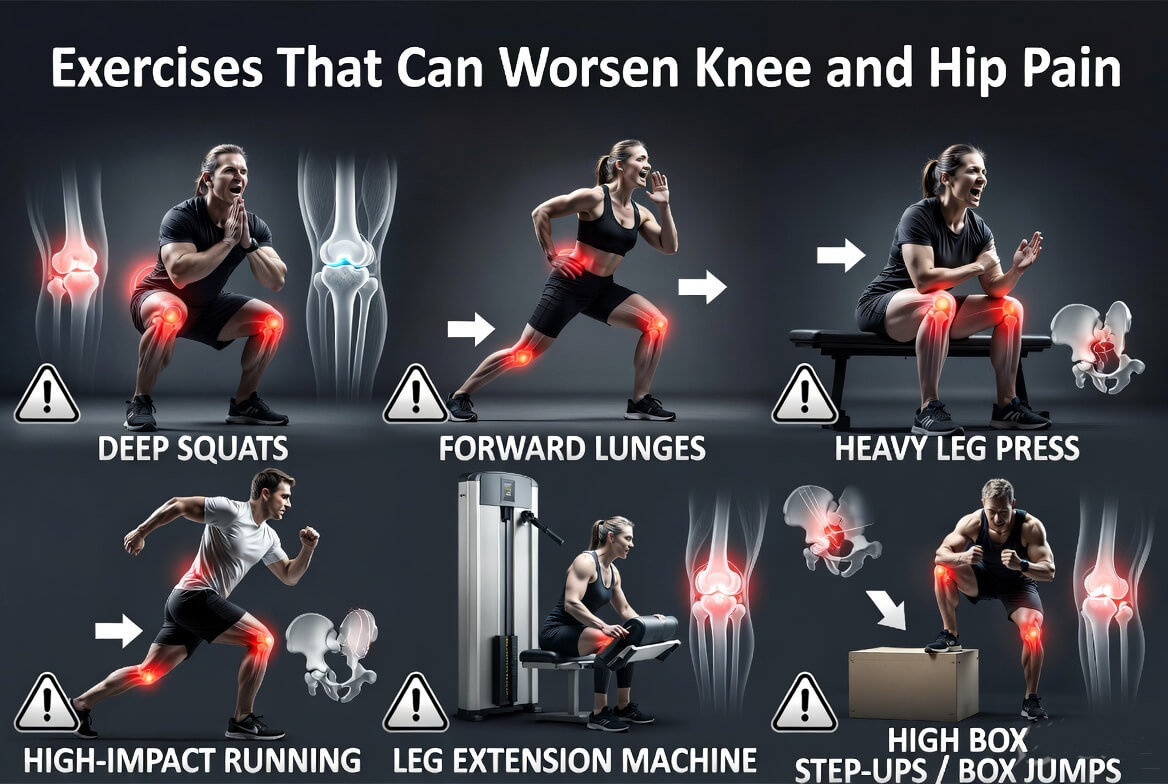
Which Exercises That Can Worsen For Knee and Hip Pain
When you’re dealing with knee and hip pain, staying active might seem like a challenge you’d rather avoid.
However, the truth is that the right kind of exercise is essential for managing joint pain and maintaining mobility. The problem isn’t exercise itself—it’s choosing the wrong exercises.
Over my years of treating patients with joint conditions, I’ve seen countless people unknowingly make their pain worse by performing movements that put excessive stress on already vulnerable joints.
Understanding which exercises to avoid can be just as important as knowing which ones to do.
Why Certain Exercises Cause More Harm Than Good
Your knees and hips are weight-bearing joints that absorb tremendous force throughout the day. When you have arthritis, previous injuries, or general wear and tear, the protective cartilage that cushions these joints becomes compromised.
When you run, each foot strike generates impact forces up to three times your body weight. That’s substantial stress even for healthy joints. For someone with knee osteoarthritis or hip pain, this repetitive pounding can inflame already irritated tissues, break down remaining cartilage faster, and create a cycle of increasing pain and disability.
Similarly, exercises that require extreme ranges of motion can compress joint surfaces, pinch inflamed tissues, and strain the supporting ligaments and tendons beyond their current capacity.
High-Impact Activities: The Primary Culprits
Running tops the list of exercises that commonly worsen knee and hip pain. While running offers excellent cardiovascular benefits, the repetitive impact makes it particularly problematic for anyone with joint issues.

Every stride sends shock waves through your lower body, and when cartilage is already thinning, your bones absorb more of that impact. Many of my patients who were avid runners have had to accept that this beloved activity might be doing more harm than good to their joints.
Jumping exercises and plyometrics fall into the same category; Box jumps, jump squats, burpees, and similar explosive movements place enormous stress on your knees and hips.

The landing phase is especially damaging—your joints must absorb several times your body weight in a fraction of a second. For someone with arthritis or chronic pain, this isn’t just uncomfortable; it can accelerate joint damage and trigger inflammatory flares that last for days.
High-intensity interval training, or HIIT, has gained tremendous popularity for its efficiency and calorie-burning potential.
Deep Squats and Lunges: When Bending Goes Too Far
Squats and lunges can be excellent exercises when performed correctly and with appropriate depth. However, deep squats that take your knees well past 90 degrees create tremendous pressure within the joint.
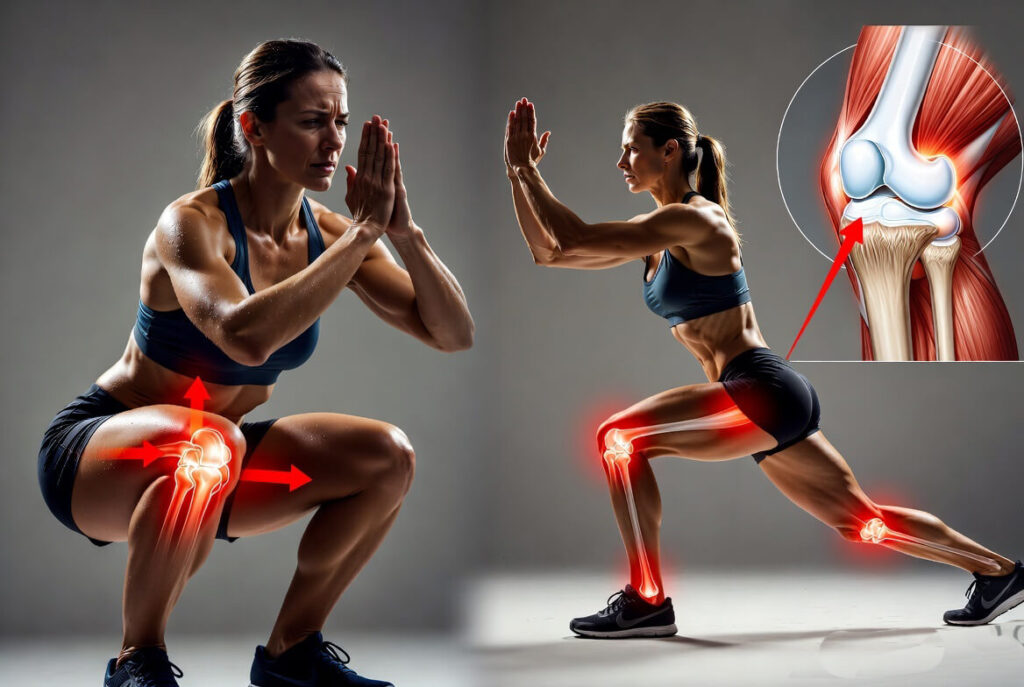
As you descend into a deep squat, the compressive forces on your patellofemoral joint—where your kneecap meets your thighbone—can increase up to seven times your body weight. For someone with arthritis or cartilage damage, this compression squeezes inflamed tissues and can cause significant pain.
The same principle applies to lunges with excessive depth. When your front knee drops too low or tracks beyond your toes, you’re placing unnatural stress on the knee joint.
Machine-Based Exercises That Stress Your Joints
The leg press machine concentrates force directly through your hip and knee joints, especially when loaded with heavy weight. This isolated stress can overwhelm compromised joints. Leg extension machines create a different problem—they generate significant shear force across the knee joint.
As you straighten your leg against resistance, your kneecap pulls forward while your shinbone resists, creating friction that irritates joint surfaces and worsens conditions like patellar tendinitis or arthritis. These machines lack the natural movement patterns that distribute stress across multiple muscle groups.
Sports and Activities With Sudden Movements
Sports requiring quick starts, stops, and directional changes place tremendous stress on joints. Tennis, basketball, soccer, and racquetball involve constant lunging, pivoting, and rapid acceleration that force your knees and hips to absorb and redirect substantial forces. Even hiking on uneven terrain can be problematic.
Rocky trails and sandy beaches require constant micro-adjustments for balance, making your joints stabilize in unpredictable ways. While variability benefits healthy joints, it increases the risk of awkward steps and painful movements when joints are already compromised.
Improper Weightlifting Techniques and Heavy Loads
Strength training benefits joint health when done correctly, but heavy weights with poor form cause problems. Heavy deadlifts, loaded barbell squats, and weighted step-ups transfer significant force through hips and knees.
When form breaks down or you’re loading joints beyond their safe capacity, you risk increased pain and injury. Instead, start with bodyweight exercises and progress to light resistance. Resistance bands, light dumbbells, and controlled movements strengthen supporting muscles without overwhelming your joints, actually helping protect them during daily activities
Exercises Requiring Prolonged Standing or Extreme Positions
Standing exercises lasting 30 minutes or more place continuous compressive load on joints, increasing inflammation and pain—especially with added weight. Overstretching also deserves caution.
While gentle stretching improves mobility, extreme stretches pushing joints to their end range can strain supporting structures. Deep yoga poses requiring extreme hip rotation or knee flexion may feel like they’re increasing flexibility, but they can irritate inflamed joint capsules and tendons. If a stretch causes sharp pain or significant discomfort, you’ve exceeded safe limits.
A Quick Reference Guide
| Exercise Category | Specific Examples to Avoid | Why They’re Problematic | Better Alternatives |
|---|---|---|---|
| High-Impact Cardio | Running, jumping jacks, burpees, box jumps | 3x body weight impact per stride; excessive joint compression | Walking, swimming, cycling, elliptical |
| Deep Flexion Exercises | Deep squats, deep lunges, full leg presses | Up to 7x body weight pressure on knee joint | Partial squats (45°), wall sits, mini lunges |
| Machine Isolation | Leg extensions, heavy leg press | Unnatural shear forces; isolated joint stress | Straight leg raises, resistance band exercises |
| High-Intensity Workouts | HIIT, plyometrics, jump training | Rapid movements; inadequate joint stabilization time | Low-impact circuit training, tai chi |
| Contact Sports | Tennis, basketball, soccer | Sudden stops, pivots, directional changes | Swimming, cycling, walking |
| Uneven Terrain | Trail running, hiking rocky paths | Constant micro-adjustments increase instability risk | Walking on flat, even surfaces; treadmill walking |
| Heavy Weightlifting | Barbell squats with heavy weight, weighted lunges | Excessive joint compression; form breakdown | Bodyweight exercises, light resistance bands |
| Extreme Stretching | Deep yoga poses, forced hip rotations | Strain on joint capsules and surrounding tissues | Gentle, pain-free stretching within comfortable range |
Recognizing When Exercise Is Doing More Harm Than Good
Learning to listen to your body is crucial. Some discomfort during exercise is normal, especially when you’re rebuilding strength. However, there are clear warning signs that an exercise is worsening your condition rather than helping it. Sharp, sudden pain during a movement is an immediate red flag—stop that exercise right away. If your pain significantly worsens during the activity or persists for more than two hours afterward, you’re pushing too hard.
Morning stiffness that lasts longer than usual or increased swelling around your joints are also signs that your previous day’s workout was too aggressive. Your joints should feel better overall with the right exercise program, even if you experience some temporary muscle soreness. If you notice your pain gradually increasing week by week despite regular exercise, reassess your routine with a healthcare professional.
Moving Forward Safely
The goal isn’t to avoid exercise—it’s to choose the right exercises for your current joint health. Low-impact activities like swimming, water aerobics, and cycling provide excellent cardiovascular benefits without the jarring impact. Gentle strength training with appropriate resistance builds the supporting muscles that actually protect your joints during daily activities. Range of motion exercises performed within comfortable limits maintain flexibility without strain.
Working with a physical therapist can be invaluable. They can assess your specific condition, identify which movements are safe for you, and create a progressive exercise plan that strengthens your body without aggravating your joints. What works for one person might not work for another—your exercise program should be tailored to your individual needs, limitations, and goals.
Remember that managing joint pain is a long-term commitment. Some trial and error is normal as you figure out which activities your body tolerates best. The exercises you avoid today might become possible again as you build strength and improve joint stability. Stay patient with the process, communicate regularly with your healthcare team, and focus on sustainable progress rather than pushing through pain. Your joints will thank you for it.
FAQs
Can I ever return to running if I currently have knee pain?
Some people can return to running after addressing underlying issues, but it depends on the cause and severity of your knee pain. Work with a physical therapist to strengthen supporting muscles, improve your running form, and gradually reintroduce running on softer surfaces with proper footwear. Many people find that shorter, less frequent runs on a treadmill or track work better than long-distance road running. Others discover that running simply isn’t compatible with their joint health and find equal satisfaction in low-impact alternatives.
Is it normal to feel some discomfort when exercising with arthritis?
Mild discomfort is normal and expected when starting a new exercise program with arthritis. You might feel some muscle soreness or slight joint achiness that resolves within a few hours. However, sharp pain during exercise, significant swelling, pain that persists more than two hours post-workout, or progressively worsening symptoms mean you need to modify your routine. The right exercise should ultimately reduce your pain over time, not increase it.
Should I exercise during an arthritis flare-up?
During acute flare-ups with significant swelling and pain, rest is often appropriate for a day or two. However, complete inactivity can increase stiffness. Gentle range-of-motion exercises or pool exercises that don’t stress the inflamed joint can help maintain mobility without aggravating inflammation. Once the acute phase subsides, gradually return to your regular exercise routine. Always discuss flare management with your doctor for personalized guidance.