

How does inflammation affect the joints?
You wake up in the morning and your fingers feel stiff and thats pain is not good for health and mind too. You stand up after a long movie and your knees protest with a dull ache In just USA there are millions of people, joint pain is a daily reality that dictates what they can and cannot do.
While we often blame aging or old sports injuries, the true culprit driving this discomfort is frequently a biological process known as inflammation.

Inflammation is often misunderstood by many human and predict what is the connect between it.
It isn’t inherently bad; in fact, it is a vital part of your immune system’s defense strategy; When you cut your finger or catch a virus, inflammation is the “first responder” that rushes to the scene to heal tissue and fight infection. Without it, simple injuries could be fatal.
However, when this process goes awry or refuses to shut down, it becomes a problem. Chronic inflammation turns the body’s defense system against itself, attacking healthy tissues instead of foreign invaders.
When this battle takes place within the confined space of a joint, the results can be painful and debilitating. Understanding the mechanics of how inflammation affects your joints is the first step toward managing the pain and protecting your mobility.
The Anatomy of a Healthy Joint
To understand how inflammation causes damage your joints, we first need to look at how a healthy joint functions properly.
A joint is essentially a biological hinge where two or more bones meet to allow movement and thats complete natural way.
It is a complex structure designed to minimize friction and absorb shock.
- Cartilage: The ends of your bones are covered in a smooth, slippery substance called cartilage. This acts as a cushion, preventing bones from rubbing directly against each other.
- The Synovium: Surrounding the joint is a thin lining called the synovium. Its job is to produce synovial fluid.
- Synovial Fluid: This thick liquid lubricates the cartilage and provides it with nutrients, much like oil in a car engine keeps the pistons moving smoothly.
- Ligaments and Tendons: These tough bands of tissue hold the bones together and connect muscles to bone, providing stability.
Synovium produces just enough fluid, the cartilage remains smooth, and movement is effortless. Inflammation disrupts this delicate balance.
How Inflammation Starts?
Inflammation in the joints doesn’t appear out of thin air but surely It is triggered by specific events or systemic issues within the body. We generally categorize these triggers into two types: acute and chronic.
Acute inflammation is the only happen when sudden damage happen and its immediate response to body. If you sprain your ankle, the area swells, turns red, and feels hot. Your immune system creates this swelling to immobilize the joint and sends white blood cells to repair torn tissues. Once the injury heals, the inflammation subsides.
Chronic inflammation is different. It is a slow, long-term simmer that doesn’t shut off. This can be caused by:
- Autoimmune errors: Conditions where the immune system mistakenly identifies the joint tissue as a threat.
- Accumulated wear and tear: Repeated stress on a joint can release fragments of cartilage, irritating the synovium and triggering an inflammatory response.
- Lifestyle factors: Obesity, smoking, and a diet high in processed sugar can create a state of systemic inflammation throughout the entire body, which eventually settles in the joints.
Destructive Impact of Chronic Inflammation
When inflammation becomes chronic, the “first responders” never leave the scene. Instead of repairing the joint, they begin to break it down.
Usually entire process begins with the synovium way and the immune cells cause the synovial lining to thicken and swell.

This inflamed tissue produces an excess of fluid, but it also releases enzymes and chemicals that are destructive to the surrounding anatomy. These chemicals begin to eat away at the cartilage, making it rough and pitted.
As the cartilage wears down, the protective cushion between the bones disappears and that is all issue come out. Ligaments and tendons surrounding the joint may also become inflamed and weakened, causing the joint to lose stability.
Common Conditions Fueled by Inflammation
While inflammation plays a role in almost all joint pain, it is the primary driver in several specific conditions.
Rheumatoid Arthritis (RA)
RA is the classic example of inflammatory joint disease. It is an autoimmune disorder where the immune system specifically attacks the synovium. Unlike wear-and-tear arthritis, RA usually affects joints on both sides of the body equally (such as both wrists or both knees). If left untreated, the chronic inflammation can cause severe bone erosion and joint deformity.
Osteoarthritis (OA)
For years, doctors believed OA was strictly a “wear and tear” disease caused by aging. However, recent research has shifted this view. We now know that inflammation is a key component of OA. As cartilage breaks down due to age or injury, it triggers an inflammatory response that accelerates the destruction of the remaining joint tissue.
Bursitis
Bursae are small, fluid-filled sacs that act as cushions between bones and soft tissues (like skin or muscle). When these sacs become inflamed—usually due to repetitive motion or prolonged pressure—it results in bursitis. Common areas include the shoulder, elbow, and hip.
Gout
Gout is a form of arthritis caused by high levels of uric acid in the blood. The acid forms sharp crystals that deposit in the joints (often the big toe). The body sees these crystals as foreign invaders and attacks them with a massive inflammatory response, causing intense, sudden pain.
Recognizing the Symptoms
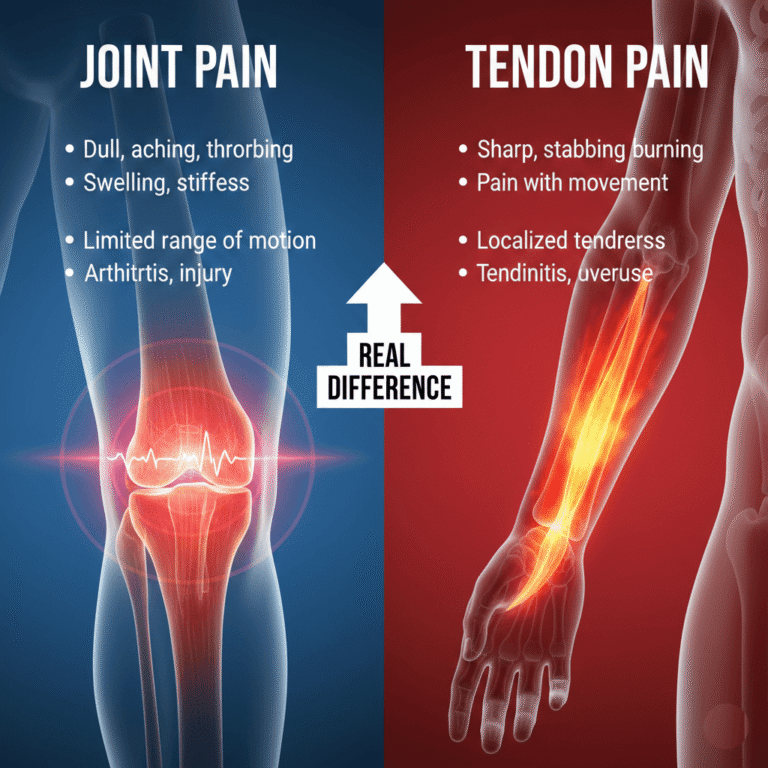
How do you know if your joint pain is inflammatory? While only a doctor can provide a diagnosis, certain signs suggest inflammation is at work.
- Swelling: This is the most visible sign. The joint may look puffy or larger than normal due to fluid accumulation and thickened tissue.
- Heat and Redness: An inflamed joint often feels warm to the touch. Increased blood flow to the area brings immune cells but also heat.
- Stiffness: This is particularly common in the morning or after periods of inactivity. Inflammatory stiffness typically lasts longer than 30 minutes after waking up.
- Loss of Function: As the joint swells and becomes painful, your range of motion decreases. You may find it difficult to fully bend or straighten the affected limb.
Management and Prevention Strategies
The good news is that you are not helpless against inflammation. While medical intervention is necessary for autoimmune conditions, lifestyle changes can significantly reduce inflammation levels and protect your joints.
Dietary Changes
What you eat acts as fuel for—or protection against—inflammation. The “Mediterranean Diet” is highly recommended for joint health. Focus on:
- Omega-3 fatty acids: Found in fatty fish like salmon and mackerel, these inhibit the production of substances that cause inflammation.
- Antioxidants: Berries, leafy greens, and nuts fight cellular damage.
- Avoiding triggers: Processed foods, excessive sugar, and refined carbohydrates can spike inflammation markers in the blood.
Motion is Lotion
It seems counterintuitive to move when you are in pain, but sedentary behavior often makes stiffness worse. Low-impact exercise helps pump synovial fluid through the joint, keeping cartilage nourished. Activities like swimming, cycling, and walking are excellent choices. Exercise also strengthens the muscles around the joint, taking pressure off the bones.
Stress Management
Chronic stress releases cortisol, a hormone that, when constantly elevated, can disrupt the immune system and increase inflammation. Techniques such as yoga, meditation, and adequate sleep help regulate your body’s stress response.
Taking Control of Your Joint Health
Joint pain does not have to be an inevitable part of life. By understanding the biological fire that is inflammation, you can take steps to dampen the flames.
Whether through medical treatment, dietary adjustments, or staying active, managing inflammation is the key to preserving your mobility and keeping your joints functioning smoothly for years to come. If you experience persistent swelling or stiffness, consult a healthcare professional to develop a plan tailored to your body’s needs.





2 Comments
Comments are closed.