

Is Joint Pain Really Just a “Normal” Part of Aging?
You wake up in the morning, swing your legs out of bed, and feel that familiar stiffness in your knees or in joints. Or perhaps you reach for a coffee mug and notice a dull ache in your fingers.
For millions of adults, these sensations become a daily ritual in human and after age 40+ joint paint start its journey. We often shrug them off, telling ourselves (and anyone who will listen), “Well, I’m not as young as I used to be.”
There is a pervasive belief that creaky, aching joints are the inevitable price of admission for growing older. We assume that once we hit a certain birthday, pain is just something we have to live with.
But is that actually true? While changes in our bodies are guaranteed as the years go by, living in constant discomfort does not have to be your destiny.
Understanding What’s Happening Inside Your Joints
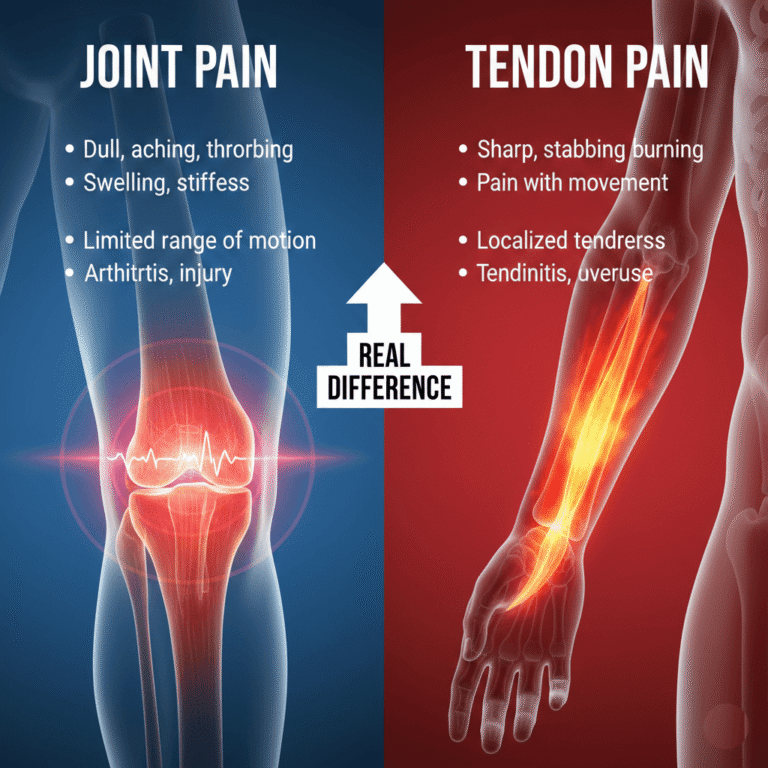
Before we can address whether pain is normal or abnormal one , we need to understand what is physically happening sometime muscle pain also someone called joint pain, so you must understand what is muscle pain or which one joint pain
Joint pain generally refers to discomfort, aches, or soreness in any of the body’s joints. It is a broad term that covers everything from a mild, temporary twinge to chronic, debilitating agony.
While there are many causes for this discomfort, two primary conditions tend to dominate the conversation as we age:
Osteoarthritis (OA)
Often called “wear and tear” arthritis, this is the most common form. It occurs when the protective cartilage that cushions the ends of the bones wears down over time. Without this cushion, bones can rub against each other, causing stiffness and pain.
Rheumatoid Arthritis (RA)
Unlike OA, this is an autoimmune disorder. In this scenario, the body’s immune system mistakenly attacks the lining of the joint capsule (the synovium). This lining becomes inflamed and swollen, which can eventually destroy cartilage and bone within the joint.
Why Age Seems to Be the Enemy
It is undeniable that age is a significant risk factor for joint issues. Our bodies are mechanical structures, and like any machine with moving parts, time takes a toll.
Several physiological changes occur as we get older that contribute to that “creaky” feeling:
| Cartilage changes: | The water content in our cartilage increases while the protein structure degenerates. This makes the cartilage less resilient and more susceptible to damage. |
| Loss of Synovial Fluid: | This fluid acts as the oil in your engine, lubricating the joints so they move smoothly. As we age, production of this fluid can decrease, leading to friction. |
| Ligament stiffening | Connective tissues often become less flexible with age, restricting range of motion. |
| Muscle loss (Sarcopenia) | We naturally lose muscle mass as we age unless we actively work to maintain it. Strong muscles support our joints; without them, the joints take on more impact and stress. |
The Distinction: Common vs. Normal
Here is the critical distinction that often gets missed: Joint pain is common, but that does not make it normal.
“Common” means the statistic is high. A significant portion of the population over 50 experiences some form of joint trouble. However, “normal” implies that it is the way things should be—that a healthy, functioning body is supposed to hurt. That is simply not true.
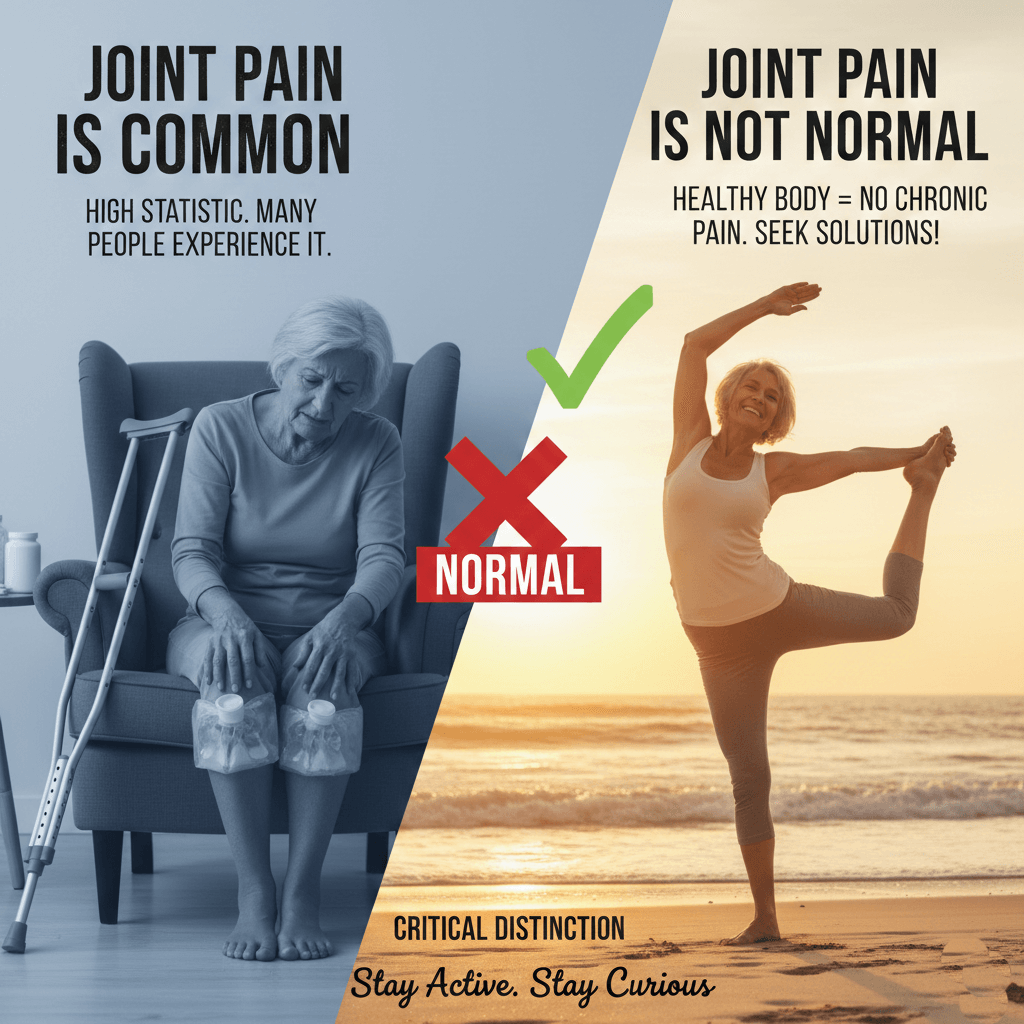
It is a signal that something is wrong—whether that’s inflammation, injury, or mechanical dysfunction. Accepting pain as a “normal” part of aging is dangerous because it leads to passivity. If you believe pain is inevitable, you stop looking for solutions. You stop moving. You stop trying to improve.
There are plenty of seniors who remain active, flexible, and pain-free well into their 80s and 90s. This suggests that while the risk increases with age, the sentence of chronic pain is not mandatory.
When to Stop Shrugging It Off
Since we’ve established that pain isn’t a requirement, how do you know when it’s time to see a professional? You shouldn’t wait until you are unable to walk to seek advice.
Consult a healthcare provider if you experience any of the following:
- Swelling and redness: Visible inflammation around the joint is a sign of an active problem that needs attention.
- Warmth: If the joint feels hot to the touch, this could indicate infection or severe inflammation.
- Persistent pain: Pain that lasts more than three days or pain that gets worse at night.
- Limited range of motion: If you can no longer straighten your arm or bend your knee fully.
- Instability: Feeling like the joint is going to give way or buckle under you.
Taking Action: Managing and Preventing Joint Pain
If you are already feeling the effects of time on your knees, hips, or hands, the goal is management and restoration. You cannot turn back the clock, but you can significantly improve your quality of life through strategic lifestyle changes.
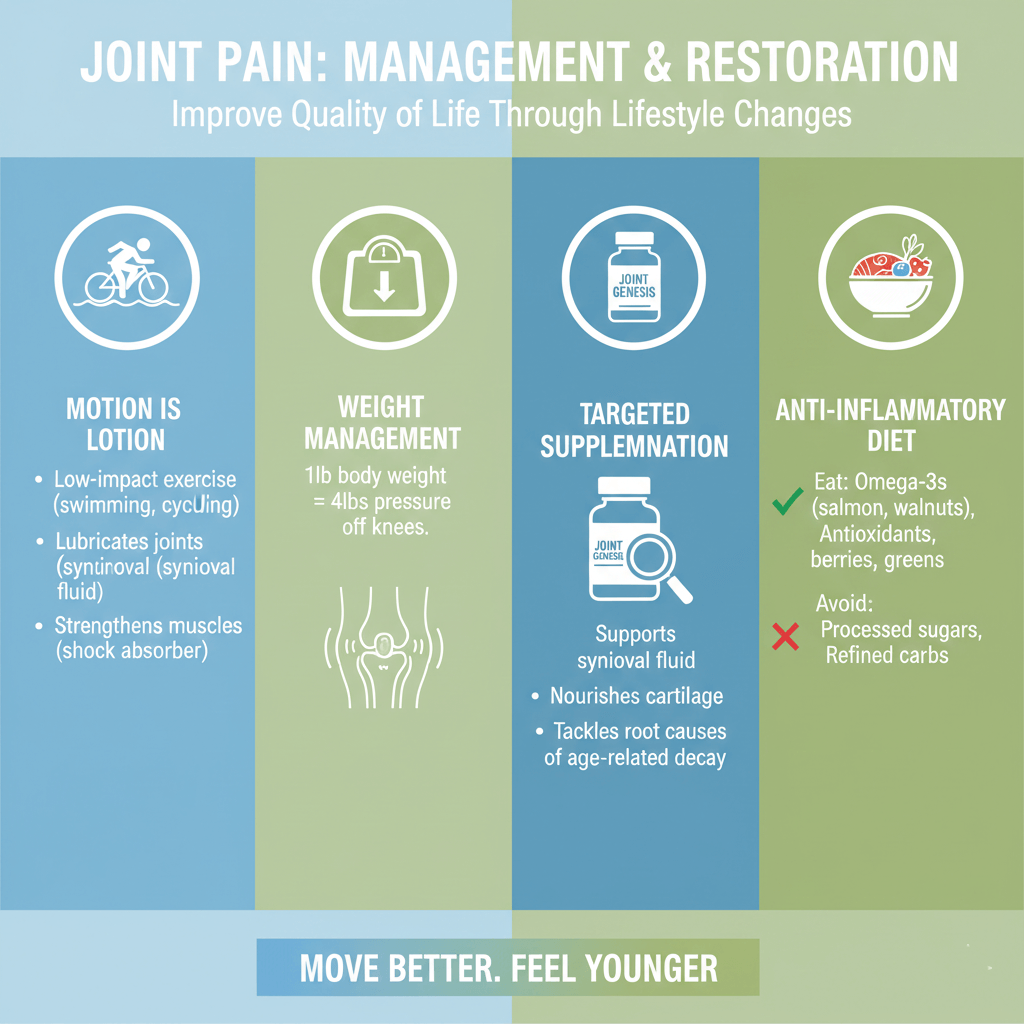
Motion is Lotion
It feels counterintuitive to move when you hurt, but inactivity is the worst enemy of arthritic joints. Low-impact exercise—like swimming, cycling, or walking—pumps synovial fluid around the joint, keeping it lubricated. Strength training is equally vital; building the muscles around the joint acts as a shock absorber, taking the pressure off the bone.
Weight Management
Physics plays a massive role in joint health. For every pound of body weight you lose, you relieve four pounds of pressure from your knees. Even a modest reduction in weight can lead to a drastic reduction in pain.
Targeted Supplementation with Joint Genesis
Sometimes, diet and exercise alone aren’t enough to combat the biological slowdown of aging. Our bodies may struggle to produce the necessary components to keep cartilage healthy and synovial fluid thick and jelly-like.
This is where specialized support can make a difference. Products like Joint Genesis are designed to tackle the root causes of age-related decay.
Rather than just masking the pain, Joint Genesis focuses on nourishing the joint matrix. It helps support the quality of your synovial fluid—essentially “re-oiling” your stiff joints—and supports cartilage health. Incorporating a targeted solution like Joint Genesis into your daily routine can be the catalyst that helps you move from “managing pain” to enjoying movement again.
Anti-Inflammatory Diet
What you eat affects how you feel. Foods rich in omega-3 fatty acids (like salmon and walnuts) and antioxidants (berries, leafy greens) fight inflammation system-wide. Conversely, processed sugars and refined carbs can trigger inflammation, making joint pain worse.
Don’t Settle for the Rocking Chair
It is time to rewrite the narrative on aging. While you may not be able to do backflips like you did in your teens, you should be able to enjoy a walk in the park, play with your grandchildren, and move through your home without gritting your teeth.
Joint pain is a signal, not a lifestyle. By listening to your body, staying active, and utilizing supportive tools like Joint Genesis, you can protect your mobility. Do not just accept the aches as the status quo. Your golden years should be defined by freedom, not friction.





One Comment
Comments are closed.